demo-operator-0007SAMPLE

4.25 ZEC
all-in 4.345 ZEC incl. buyer fee + execution buffer
→ SELECTED: lowest valid asking price, affordable, under ceiling

Trading fees fund a growing zkSNARKs collection. The buyer takes the lowest-priced valid listing when settled funds and price limits allow. When the treasury sells at a profit, half of every realized gain is sent back to staked $SNARK holders, split by stake size.
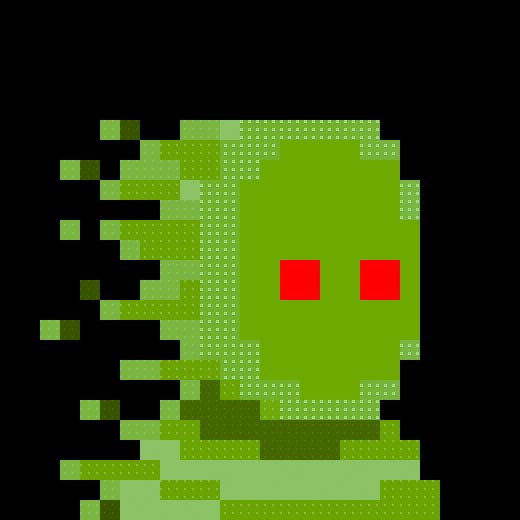







Collection examples — not treasury holdings
community-source reposts via the public @zksnarks_ index · rights not verified
NOT LIVE YET — the official CA appears here at launch$SNARK has not launched. Any contract address circulating before it appears here is a scam. When live, the CA will be shown here and cross-checkable on /status.
Reading the live Zilkroad floor…
Two separate paths. The loop above is the acquisition path and it is the default: fees become collectibles, and the collection stays. The sale/payout path — bounded sale → realized-gain split → funded distribution epoch → claims — is optional and only ever opens when eligible participants vote for a specific, limited sale.

Every trade of $SNARK is intended to carry an additional creator tax of 5% (requested, not verified). All net creator receipts are earmarked for acquiring zkSNARKs — no developer percentage, no buybacks, no dividends from trading taxes.
5% is the requested launch parameter, awaiting verification against the live factory configuration — and it is not the total all-in trading cost. Base, pool and opening-period fees apply separately.
Every applicable fee will be disclosed separately once verified. The UI never presents 5% as the total cost of trading.
The buyer sorts valid listings by asking price and takes the cheapest one it can afford within the approved ceiling. If the cheapest valid listing is unaffordable, the buyer waits — it never skips it to buy a more expensive one.
An expensive rare sitting at the floor is not excluded for its trait — if it is the lowest valid price, it is the candidate. But traits never justify paying a premium. Traits are simply not selection inputs.
Sample data from the fixture collection local-demo-snarks.invalid, evaluated by the same selectFloor function the buyer service uses. No live market data. The portraits are sourced collection examples (community reposts, rights not verified); the prices belong to the fictional demo listing IDs — no claim that any depicted real item is for sale at any price.
The kind of character the archive is built for — shown as a sourced example of the collection's art, not as anything the treasury holds.
A holding appears here only after payment, collectible identity, destination and ownership evidence all check out. Paid is not owned.
The archive is empty. Fees accumulate until the marketplace and custody path are verified.
View every holding
Mature, opted-in stakers can approve specific, bounded sales. Nothing sells by default.
Process: a proposal needs quorum (the larger of 5% of initial issued supply or 20% of eligible escrow supply, counted across for + against + abstain), a 2/3 supermajority of non-abstaining votes, a 24h voting delay, 48h of voting, and a 24h execution delay before the custody side may execute the bounded sale.

After a settled sale, acquisition capital and any prior realized losses are recovered before anything is shared. Half of the remaining realized gain can go to eligible participants; the rest stays in acquisitions.
6 ZEC capital returns to acquisitions, the 6 ZEC gain splits 50/50: 3 ZEC retained gain stays in acquisitions, 3 ZEC is allocated to eligible participants — before payout conversion costs, which reduce the final funded claim amount. Realized losses carry forward and must be recovered before any future split. There is no fixed yield; no sale means no sale-derived distribution.
Fees, conversions, acquisitions, sales and refunds each produce a receipt with status, route, references and verification strength. There is no live activity yet — the receipts below are demo fixtures showing the format.
Open the activity logThe EVM vault can enforce spending rules on-chain. Native-chain purchases and custody depend on automated off-chain services and disclosed operators. A receipt hash is not, by itself, proof of ownership.
Currently unavailable, honestly: no verified Robinhood Chain identity, no verified Pons deployment, no documented Zilkroad listing or purchase API, no verified ETH→ZEC conversion route, no independent native-side ownership verification. Full register.
Not automatically. Voting and distribution eligibility are technical participation mechanisms. Legal ownership and redemption rights would need to be separately established and accurately disclosed.
No. It is the requested additional creator tax — unverified until launch. Base, pool, opening-period and execution charges apply separately and will be disclosed once verified.
After the marketplace, payment route, custody and recovery, spending limits, and production authorizations are verified — each is a named gate on the status page. A calendar date never turns on spending, and there is no countdown.
Nothing is deployed, so nothing is held. Post-deployment custody and operator authority will be disclosed on the transparency page before any live gate opens.
No. SNARKSTR is an independent project — not affiliated with zkSNARKs, Zilkroad, Robinhood, Zcash, or Pons.